


Logo Design
How Much Does a Logo Cost? (Full Breakdown)
Published on Sep 8, 2026
Plan for $0–$100 with AI tools, $1,000–$5,000 with a senior designer, and $5,000–$25,000 with an expert or studio; broader branding firms start around $25,000, with top-tier agencies at $100,000+
The useful question is what you receive for that price: a downloadable mark, a custom logo system, or an identity your whole business can use.
As a brand identity designer, I recommend comparing the scope, process, and final handoff before comparing the number at the bottom of a proposal.
If you are comparing local specialists, explore my selection of brand identity designers in NYC.
How much does logo design cost in 2026?
Use these USD ranges as planning guidance, then request a written quote for your actual project.
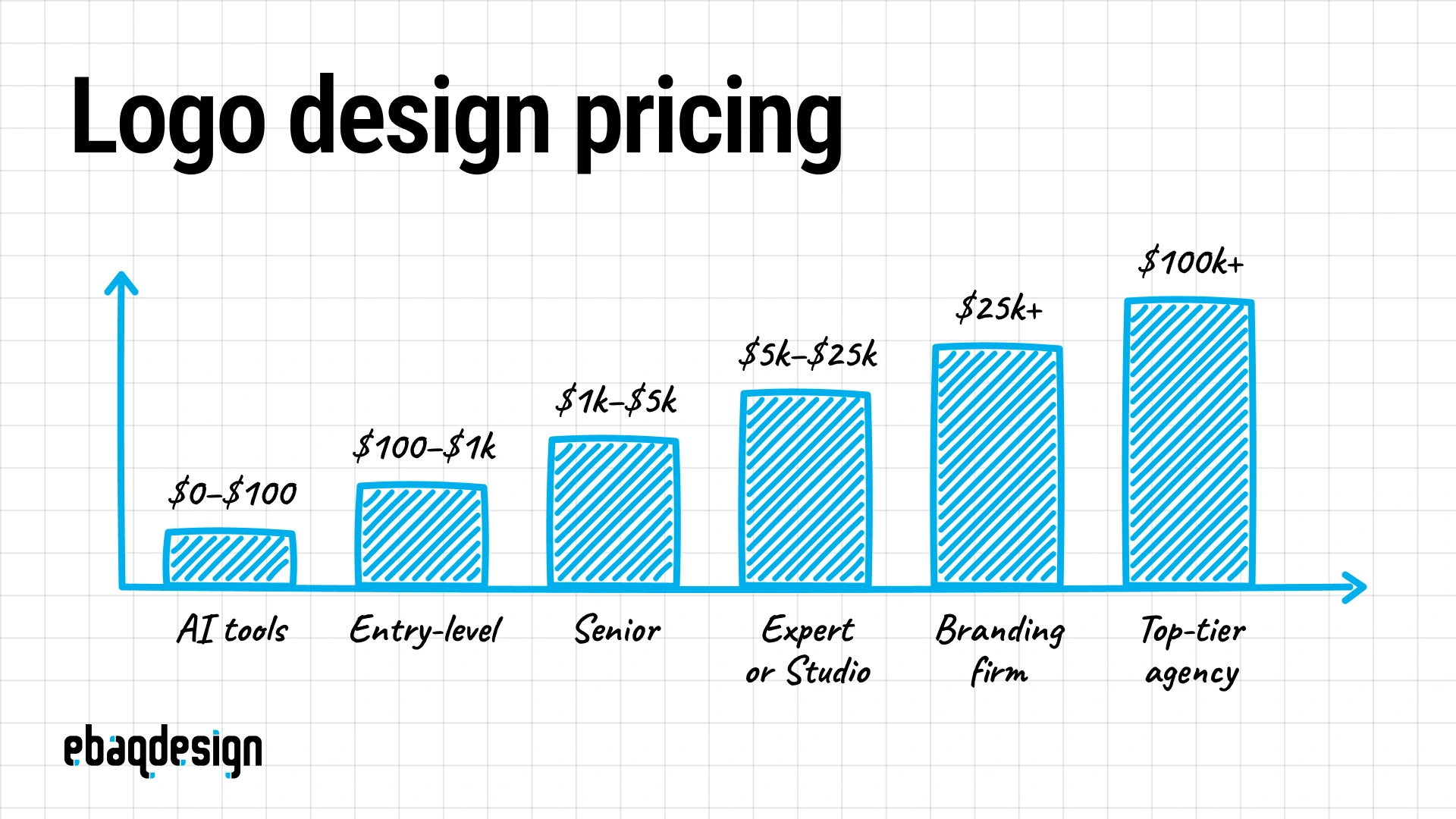
| Service provider | Budget | Scope of work |
|---|---|---|
| AI tools | $0–$100 | Self-directed design; downloads and licenses vary. |
| Entry-level | $100–$1,000 | A narrow brief, limited exploration, and a basic handoff. |
| Senior designer | $1,000–$5,000 | Custom logo exploration, refinement, variations, and final files. |
| Expert or studio | $5,000–$25,000 | Deeper discovery and design direction; confirm identity deliverables. |
| Branding firm | $25,000+ | Brand strategy, identity system, guidelines, and key applications. |
| Top-tier agency | $100,000+ | Complex brand strategy, identity programs, stakeholder alignment, and rollout planning. |
These are approximate price ranges.
They overlap because experience, geography, complexity, and deliverables vary, and large rebrands can exceed these figures substantially.
For a concrete low-cost reference, Looka's published help page lists a $20 basic PNG package and a $65 premium package with multiple files and variations.
That is a product purchase rather than a bespoke designer engagement, and you should check current checkout pricing and inclusions before buying.
Logo only or full brand identity?
A logo is one part of a brand identity, so two proposals with the word “branding” on the cover may solve very different problems.
A logo-only project can include a primary mark, alternate lockups, a small-size version, color variations, and a practical file package.
A brand identity system adds the rules and ingredients that make the business recognizable beyond the mark: typography, color, imagery, layout, and applications.
Discovery workshops, positioning, naming, messaging, packaging, website design, motion, and rollout support are additional scope unless the proposal explicitly includes them.
If your business already has a clear position and useful visual guidelines, a focused logo project may be enough.
If every sales deck, social post, and website page looks like a different company, a new mark alone will leave the larger problem unresolved.
For the wider deliverables, see my guide to what a branding package includes.
What do you get at each budget?
Choose the level of help your business needs, including how much of the brief and decision-making you can handle yourself.
Under $1,000: AI tools or entry-level support
AI tools, templates, entry-level freelancers, and some contest packages can suit an early experiment or a small project with a tightly defined requirement.
The advantages are a smaller upfront spend and, in some cases, a quick result.
The tradeoffs can include less exploration, limited direct guidance, fewer useful file formats, and imagery that other businesses may also use.
Before buying, check whether you can use the chosen elements commercially, whether they are exclusive, and whether the final files suit printing as well as a website.
A low price does not automatically mean poor work, but it makes a clear, limited scope especially important.
$1,000–$5,000: a focused project with a senior designer
This is a practical planning range to explore when you want a senior designer to develop a distinctive mark around a defined business brief.
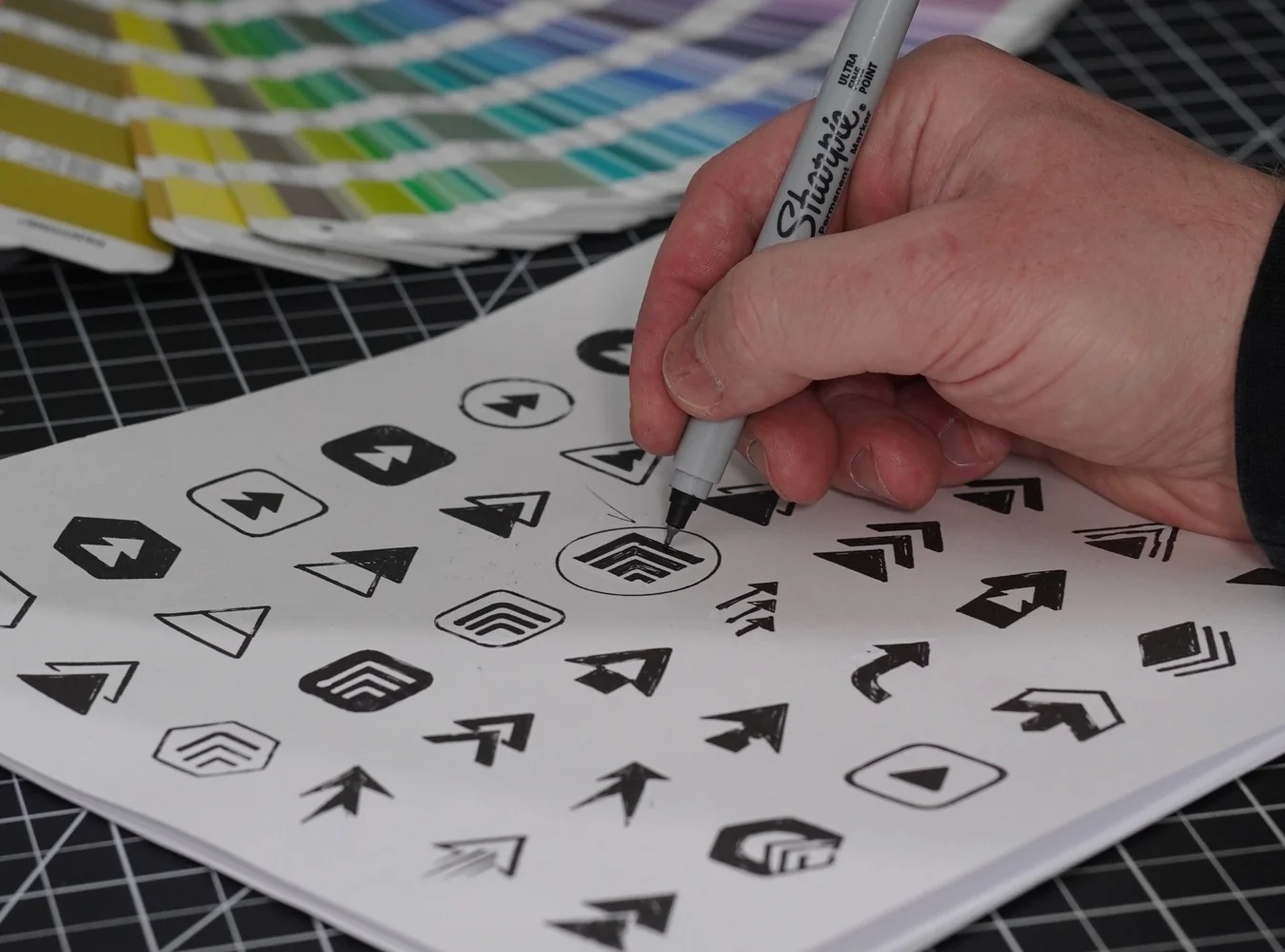
When choosing a logo designer, look for relevant work, a clear explanation of the design decisions, an agreed refinement process, and examples of completed handoffs.
The benefit is direct collaboration and more opportunity to test the design against your audience, competitors, and actual uses.
You will still need to give thoughtful feedback, and a complete visual identity or website may sit outside the quote.
$5,000+: expert or studio support and broader scope
An expert or studio can bring deeper exploration, strategic guidance, stakeholder alignment, and more demanding production experience.
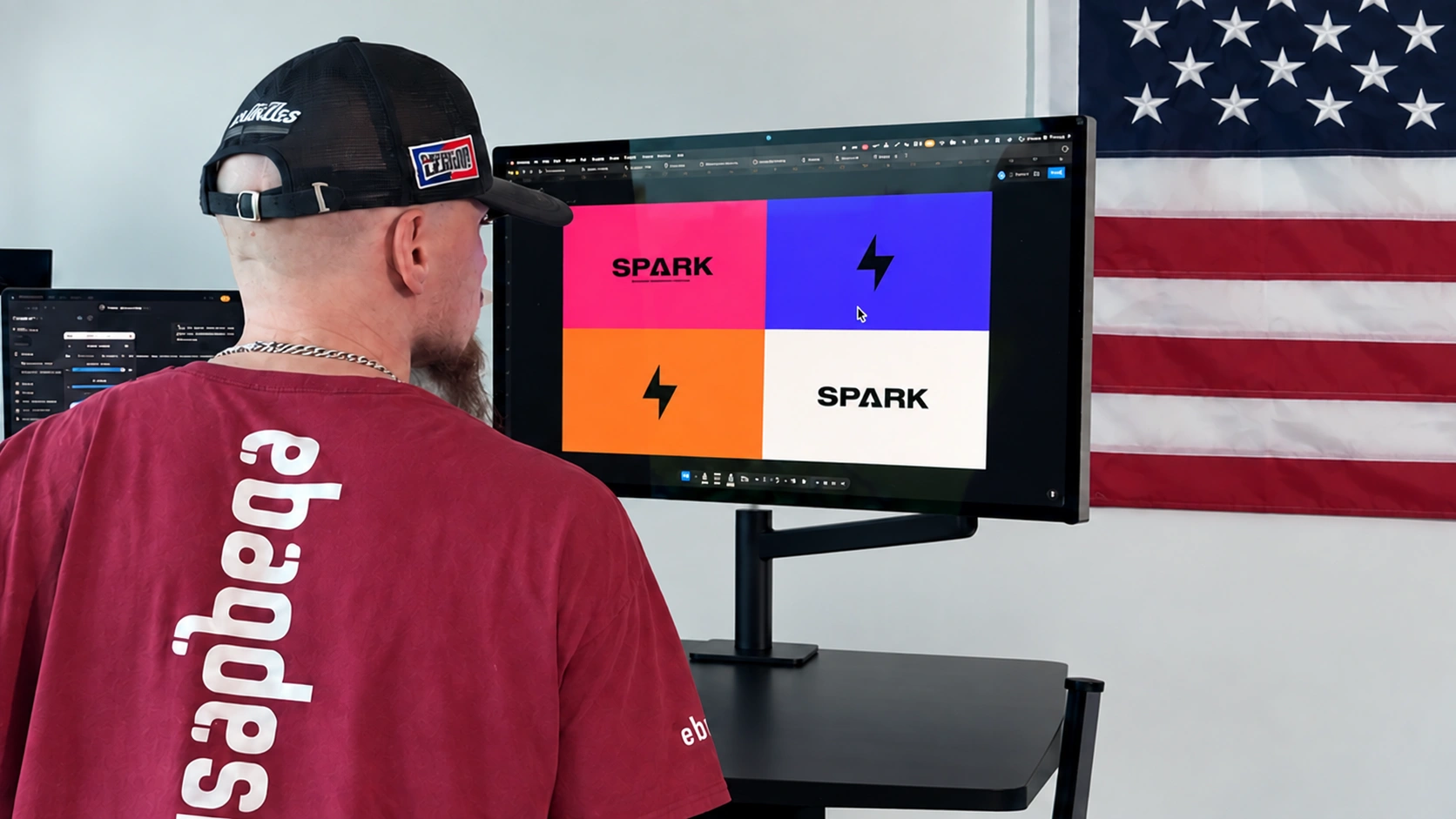
The $5,000–$25,000 band covers an expert or studio; broader branding firm engagements start around $25,000, while top-tier agency programs start around $100,000.
At this level, ask exactly how much of the fee covers the logo and how much covers strategy, identity development, applications, or rollout.
The additional investment can be useful when the business has a consequential launch, established recognition to protect, or several teams who need to use the identity consistently.
More people and more deliverables also mean more coordination, so a large agency process can be unnecessary for a simple, well-defined need.
Why investing in logo design matters
Your logo gives people a consistent visual cue across the places they encounter your business.
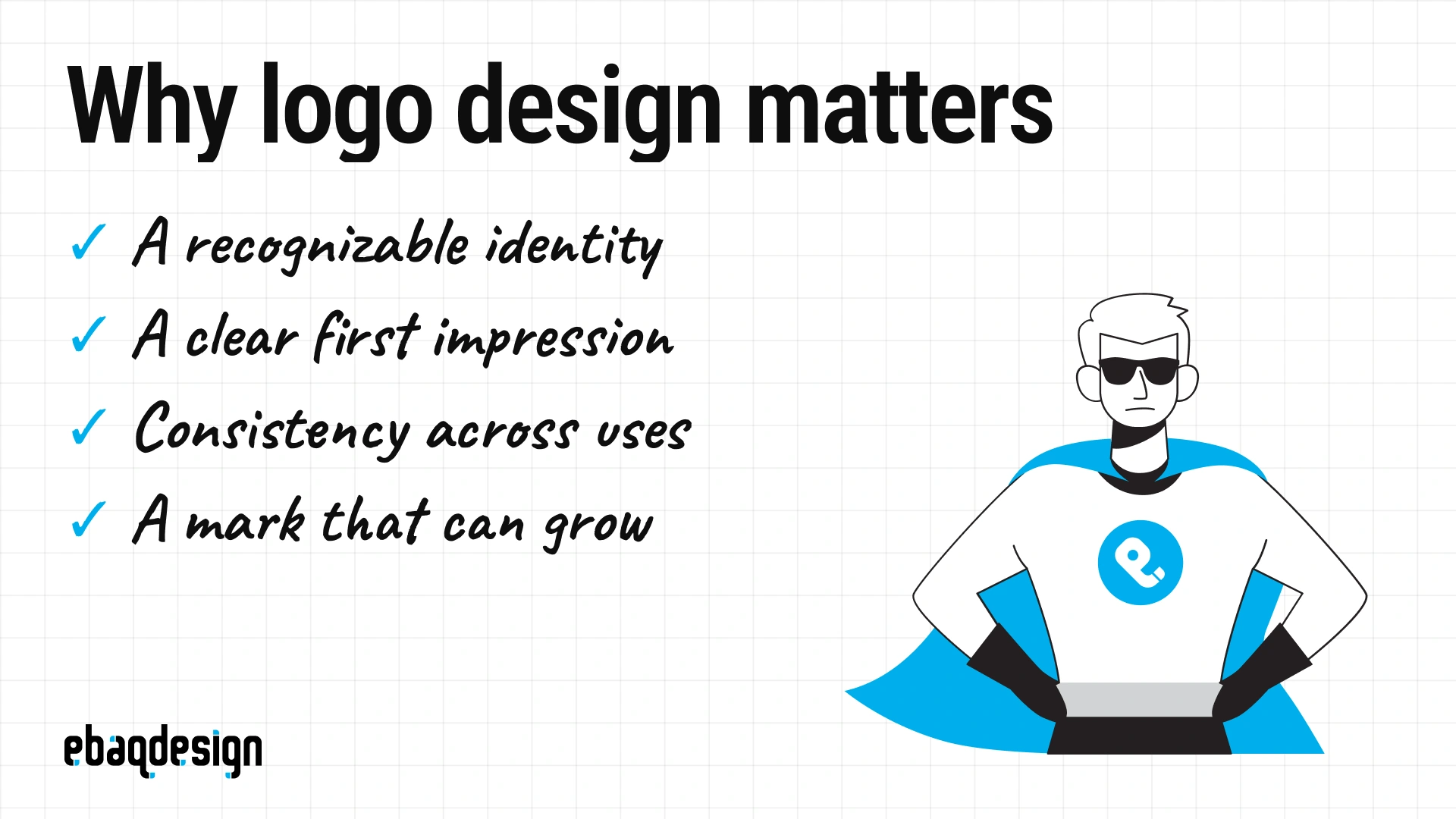
It can help customers recognize you, connect your communications, and distinguish your offer from nearby competitors.
Like a well-chosen storefront, it sets expectations before someone has experienced the product or service.
But the design has to work on a tiny profile image, a proposal, packaging, signage, and whatever else your business actually uses.
Recognition comes from a useful mark applied consistently, supported by the experience your business delivers.
A logo cannot repair a weak offer on its own, which is why I start with the business problem rather than a preferred symbol.
What changes the price of a logo?
The fee reflects the decisions and work required to reach a usable result, not simply the number of lines in the final mark.
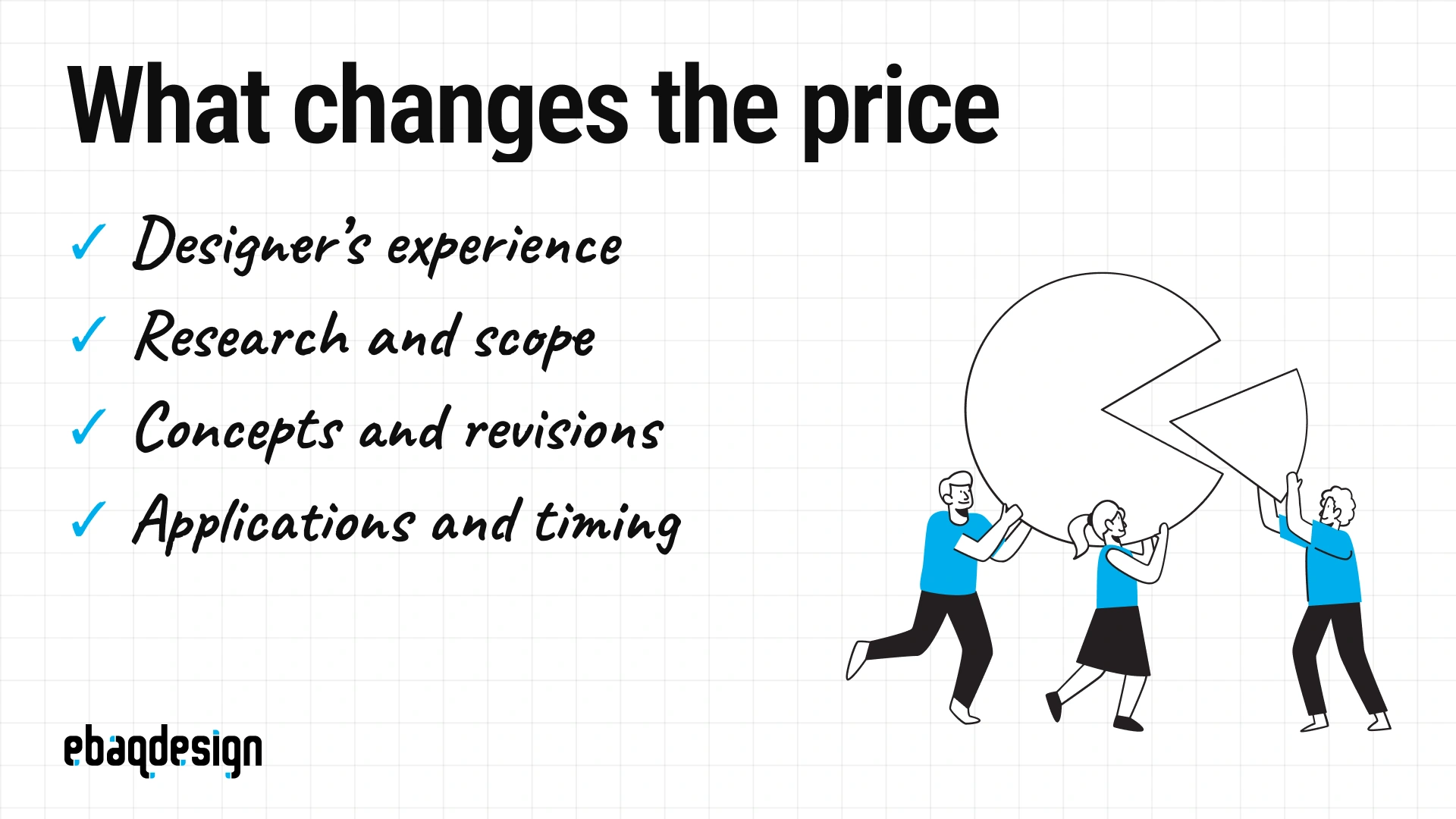
Experience and responsibility
An experienced designer brings judgment about what to explore, what to discard, and how to defend the final direction.
Ask who will actually do the work and present it, especially when comparing a solo designer with an agency team.
Research and strategic clarity
Competitor reviews, audience interviews, market context, and positioning discussions take time, but they help establish what the design needs to communicate.
If you already have a well-supported strategy, share it so the designer can build on it rather than repeat the discovery work.
Concepts, revisions, and approvals
Define how many directions will be presented, how feedback is collected, and what counts as one revision round.
For example, a proposal might include two directions and two rounds of refinement on one selected direction, with additional work quoted separately.
A new direction after approval is different from a refinement, so agree on how changes to the brief are handled.
Applications, rights, and deadlines
A logo tested for embroidery, packaging, multilingual use, and a mobile app requires a different scope from a single website wordmark.
Ask the designer to specify ownership or licensing terms in writing, including any third-party typefaces or assets.
Rush delivery, multiple decision-makers, and a fixed launch date can change the workload and price.
What should your logo package include?
Agree on the handoff before work begins so you do not discover a missing format when a printer or developer asks for it.
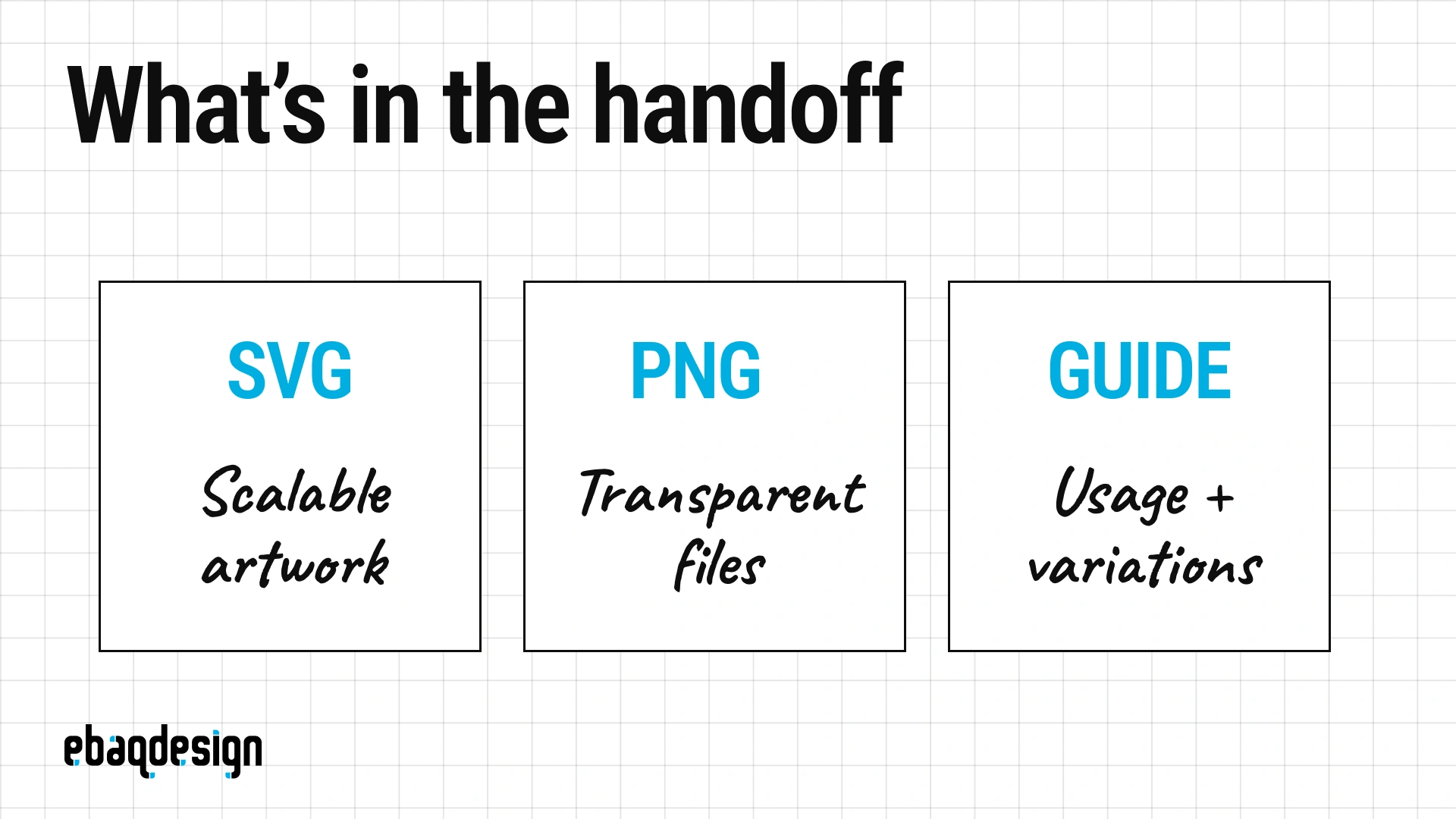
- Final logo variations: the approved primary mark, alternate lockups, and any agreed icon or small-size version.
- Scalable vector artwork: SVG and a suitable print-ready vector format, with editable source files if contracted.
- Raster exports: transparent PNG files and other sizes or formats your team actually needs.
- Color versions: full color, black, and reversed white versions that remain legible on the intended backgrounds.
- Basic usage guidance: clear space, minimum size, color values, and examples of incorrect use.
- Written terms: the final approved artwork covered by the agreement, rights granted, payment milestones, and any third-party licenses.
Vector files can scale without the pixelation of a small raster image, but having a vector file does not establish trademark clearance.
A full identity manual, social templates, custom typeface, or website should appear as its own deliverable when required.
Why a simple logo can require substantial work
The final mark may look effortless because the designer has removed the ideas and details that do not help.
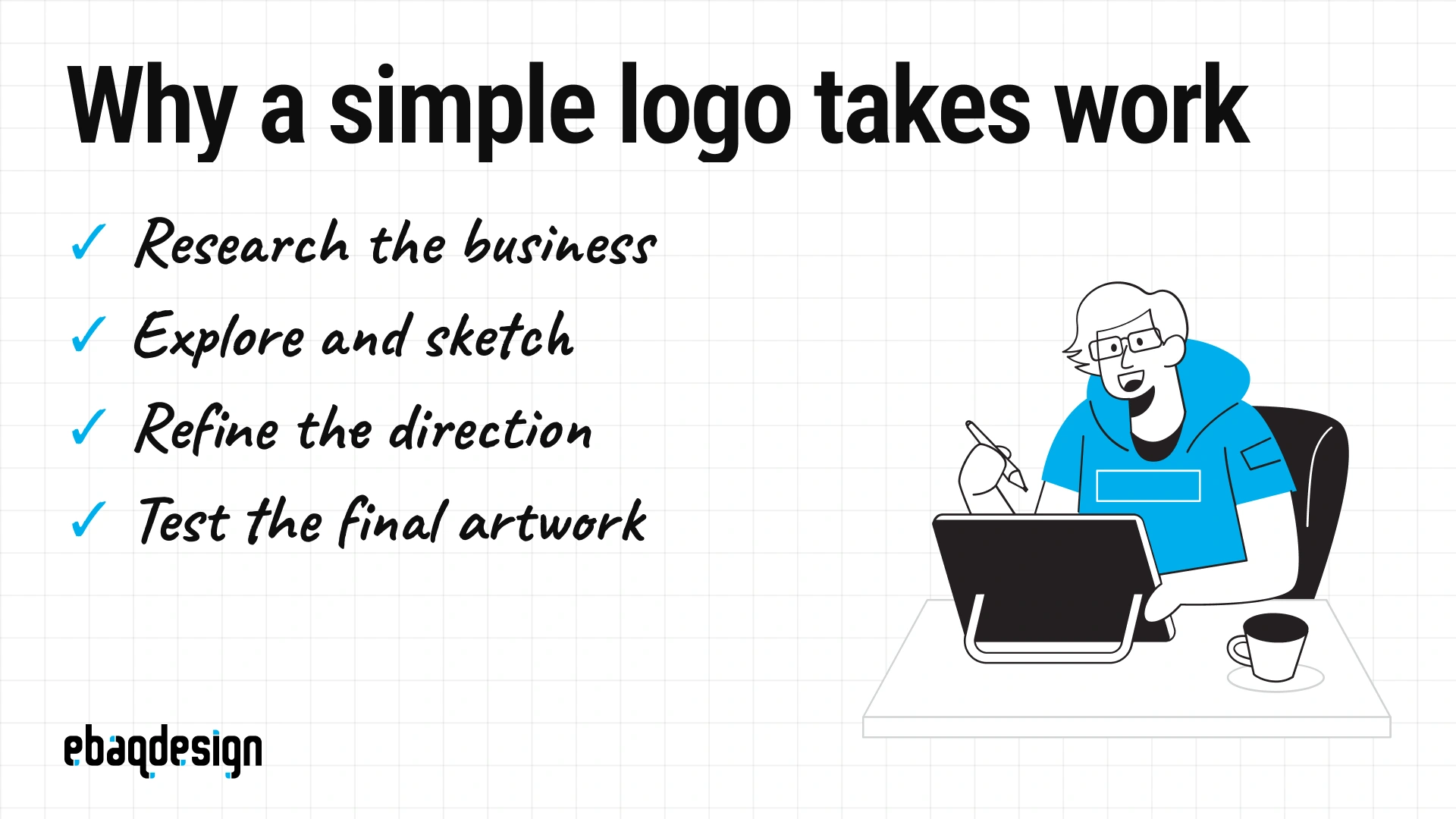
The logo design process usually moves from understanding the business to exploring concepts, refining a selected direction, and testing the artwork in use.
Sketching, typography studies, proportion adjustments, color decisions, and vector construction all contribute to the result.
Technical checks matter too: a mark that looks convincing on a large presentation slide may lose its detail in a browser tab or fail in one-color printing.
Ask to see how the designer evaluates these constraints, rather than judging value by the number of concepts presented.
Pay for a sound process and a useful outcome, not a promise that a more expensive logo automatically creates a more successful business.
How to budget for your logo project
Start with the business need and work outward to the full cost of getting the design into use.
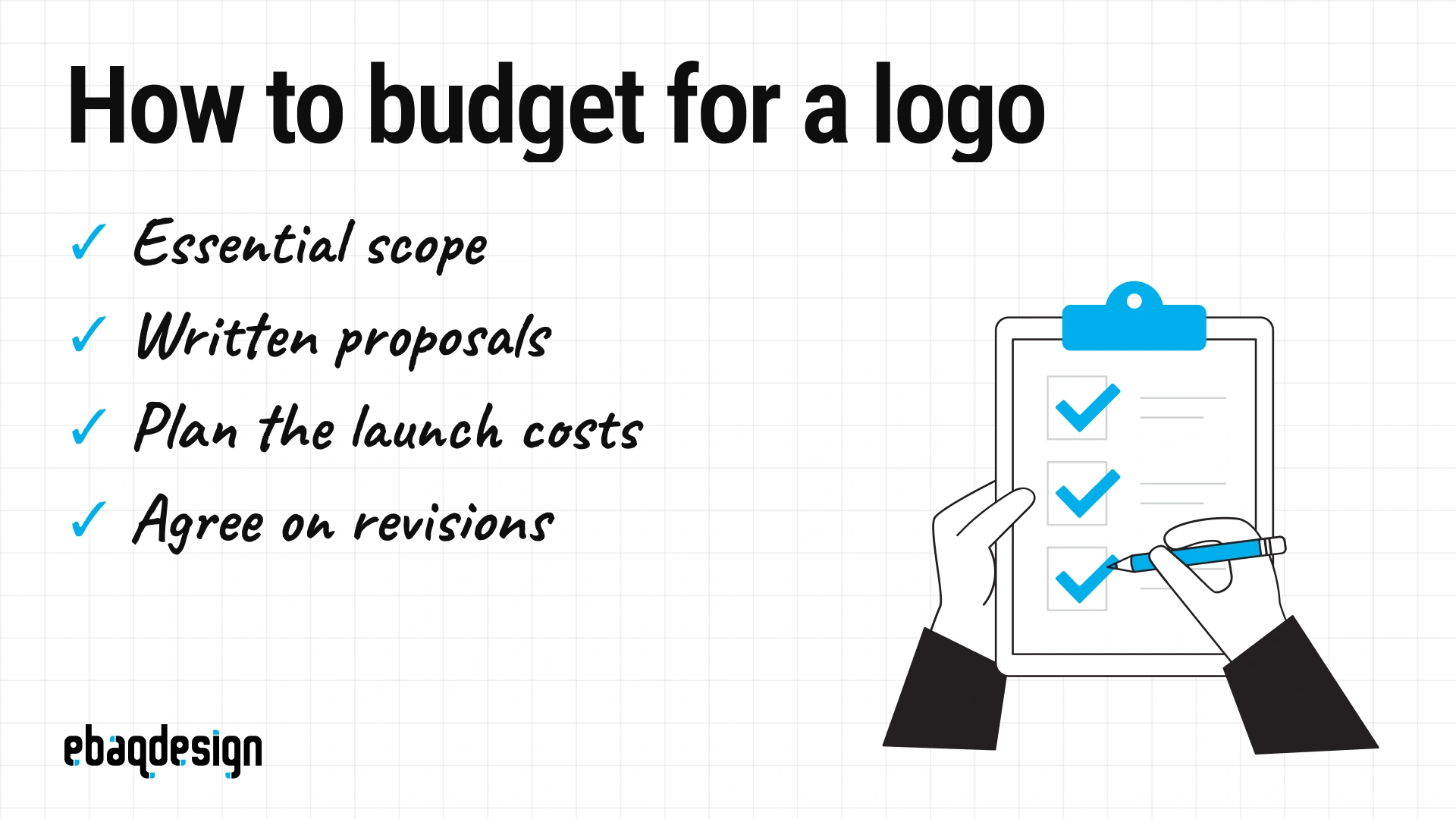
1. Write a short brief
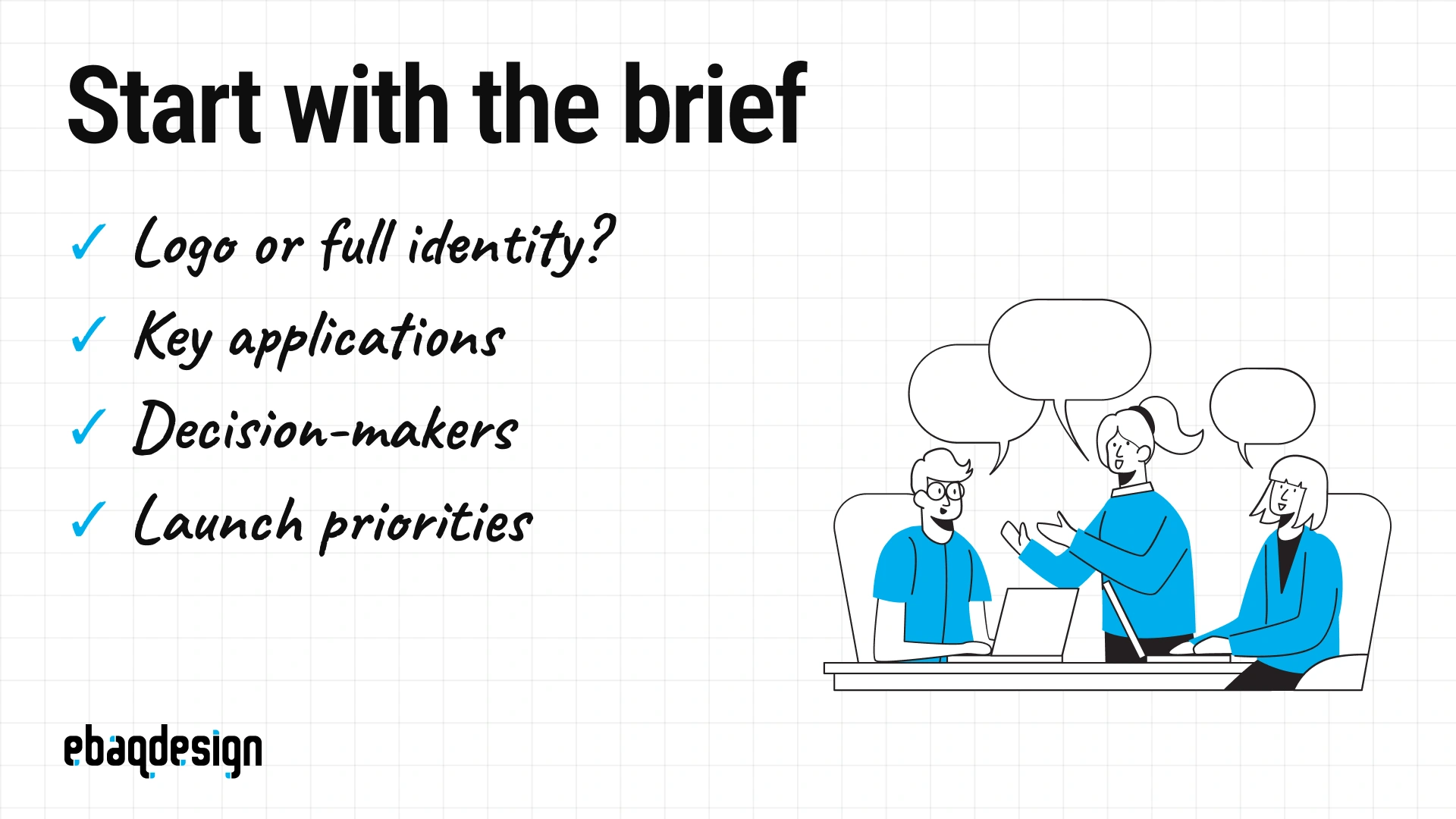
Explain what you sell, who you need to reach, how you differ, what the logo should communicate, and why you are commissioning it now.
List the actual uses, such as a website header, social avatar, storefront, packaging, or presentation template.
2. Separate essentials from later additions
Identify what must be ready for launch and what can wait, including secondary applications and future brand extensions.
Reserve room in the budget for implementation, production, licenses, and any separately commissioned specialist work.
3. Agree on a realistic schedule
Request a project calendar covering discovery, concept presentation, feedback, refinement, and final delivery.
A focused logo project may take several weeks, while a broader identity engagement with multiple approvals can take months.
Use the designer's proposed schedule for your scope rather than assuming a universal turnaround, and check what happens if feedback is delayed.
4. Compare total scope, not just the initial fee
For a fixed-fee project, confirm what triggers additional charges and when payment is due.
For hourly work, ask for an estimated range and an approval point before that range is exceeded.
Think about the cost of replacing signage, packaging, and other materials later as well as the initial design fee.
Questions to ask before accepting a quote
Send the same brief to a small shortlist so each proposal answers the same buying decision.
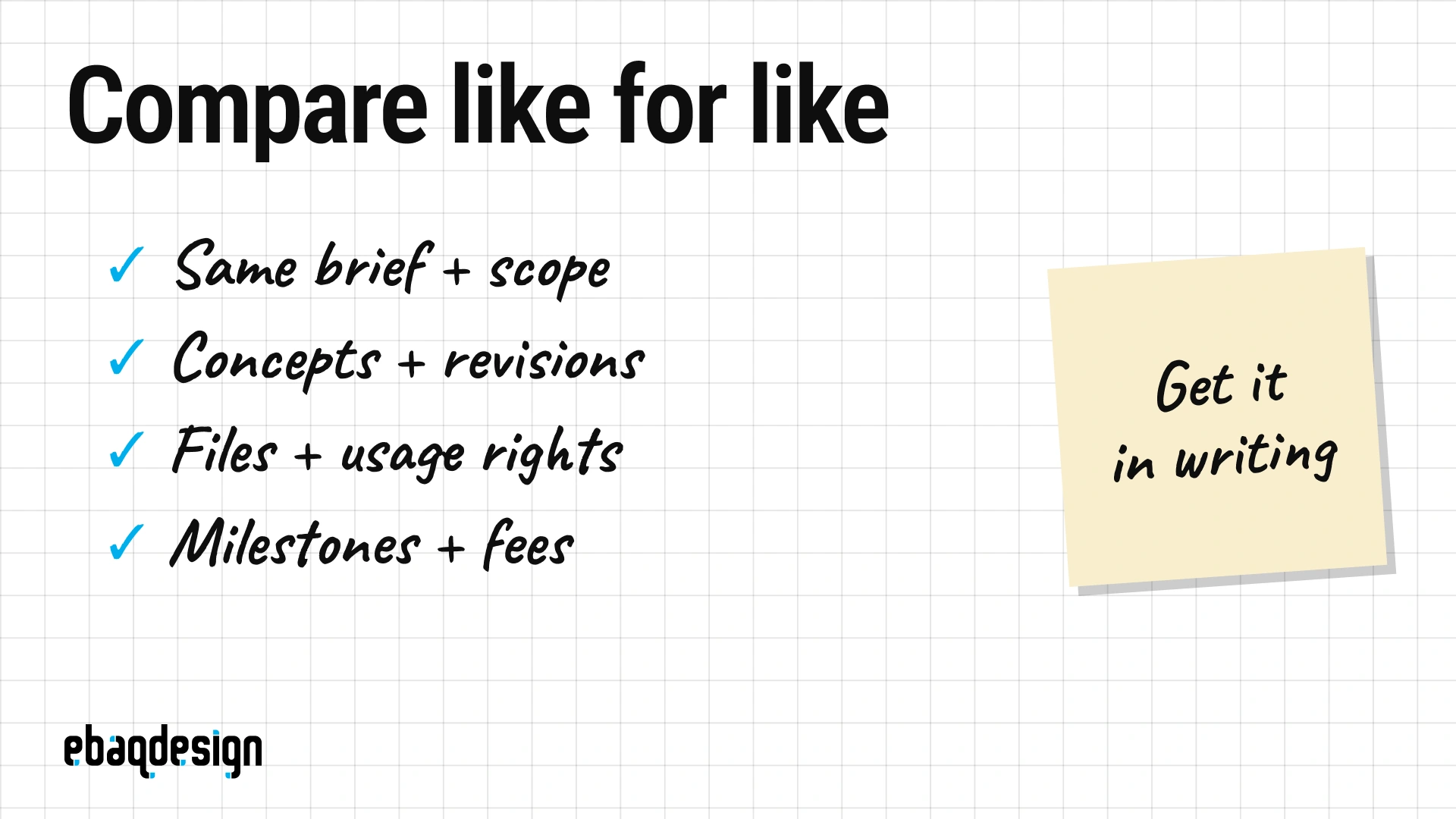
Ask these questions when comparing proposals:
- Is this a logo-only project or a broader identity engagement?
- Who designs the work, and what relevant projects can I review?
- What research, concepts, revisions, and meetings are included?
- Which final files, variations, and usage guidelines will I receive?
- What rights and third-party licenses are included?
- What is excluded, and how is extra work approved and priced?
- What are the milestones, feedback deadlines, and payment terms?
A specific answer is more useful than “unlimited revisions” or a long list of file extensions without a clear scope.
If you are a designer deciding how to set your own fees, my separate logo pricing guide addresses that side of the conversation.
What famous-logo prices actually tell you
Historic logo prices are interesting, but they are poor substitutes for a quote built around your business.
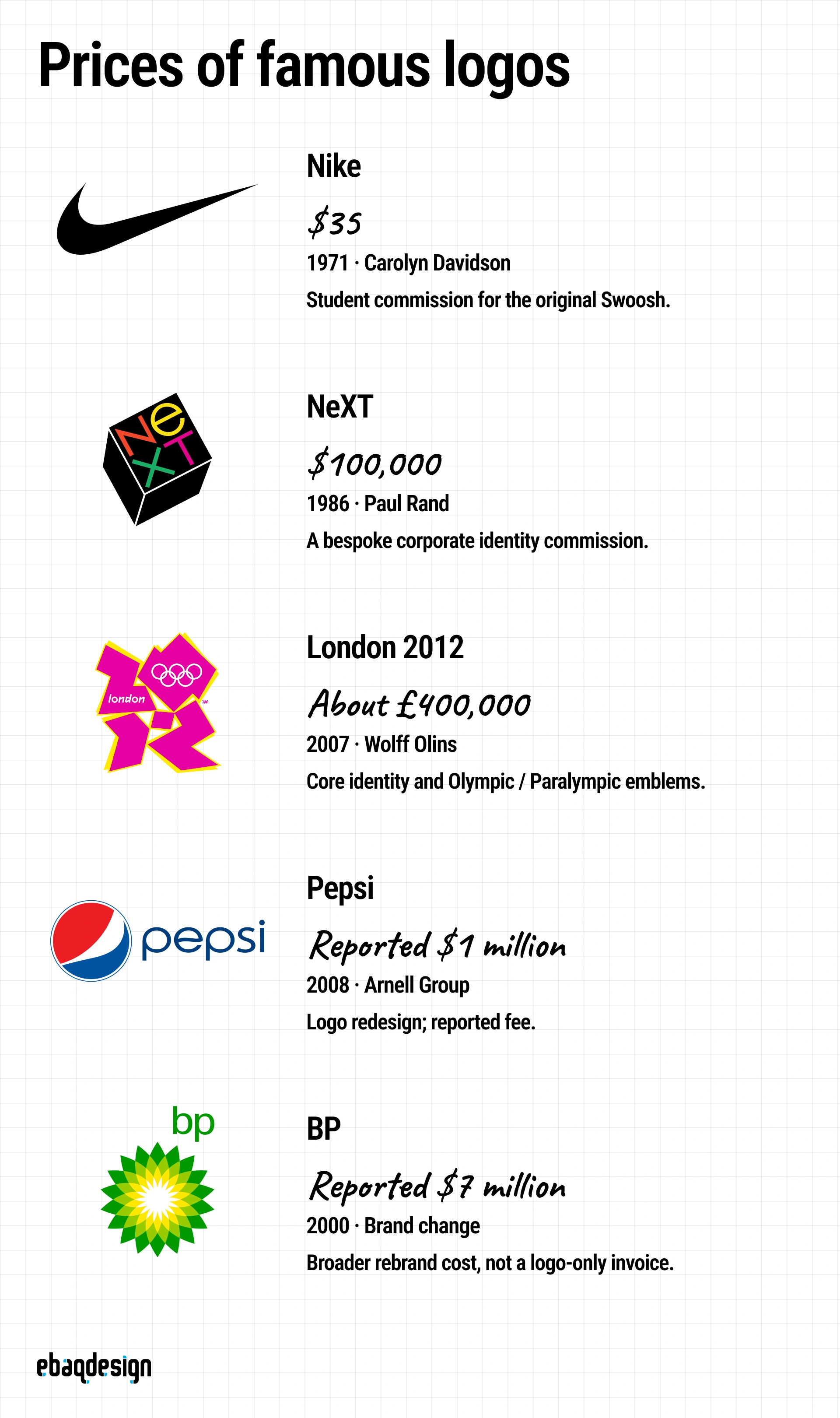
Nike's own archive confirms that Carolyn Davidson invoiced $35 for the original Swoosh in 1971.
That figure describes a particular commission in a particular year, not the cost of building Nike's recognition over decades.
NeXT’s $100,000 commission brought Paul Rand’s corporate identity expertise to Steve Jobs's new company, as documented by the People’s Graphic Design Archive.
London 2012’s approximately £400,000 covered a broader identity: Parliament’s 2007 answer gives the design cost, while the London Assembly’s scope explanation includes the Olympic and Paralympic emblems and core brand identity.
Pepsi: reported $1 million for the 2008 redesign.
BP: reported $7 million for its 2000 brand change.
These are historical amounts in their original currencies, without inflation adjustment, and their different scopes make them unsuitable as a like-for-like price ranking.
Widely repeated corporate “logo costs” may describe naming, strategy, brand systems, or rollout, so they should not be compared with a standalone design fee without a reliable scope breakdown.
Your budget should follow your brief, not the cheapest or most spectacular number in a famous-logo list.
Need help choosing the right scope?
I'm Arek Dvornechuck, and I design brand identities around the business goals, audience, and practical uses they need to serve.
Explore my portfolio to see how the logo connects to the wider identity.
Book a call to discuss your project, priorities, and budget so we can define an appropriate scope.
Ready to build a brand people remember?
Tell me what you’re launching, changing, or trying to make look better.